Water Heaters
Water Heater Leaking? What to Do Right Now
- Turn it off first: switch off the breaker (electric) or set the gas valve to OFF or PILOT (gas), then close the cold water valve on top of the tank.
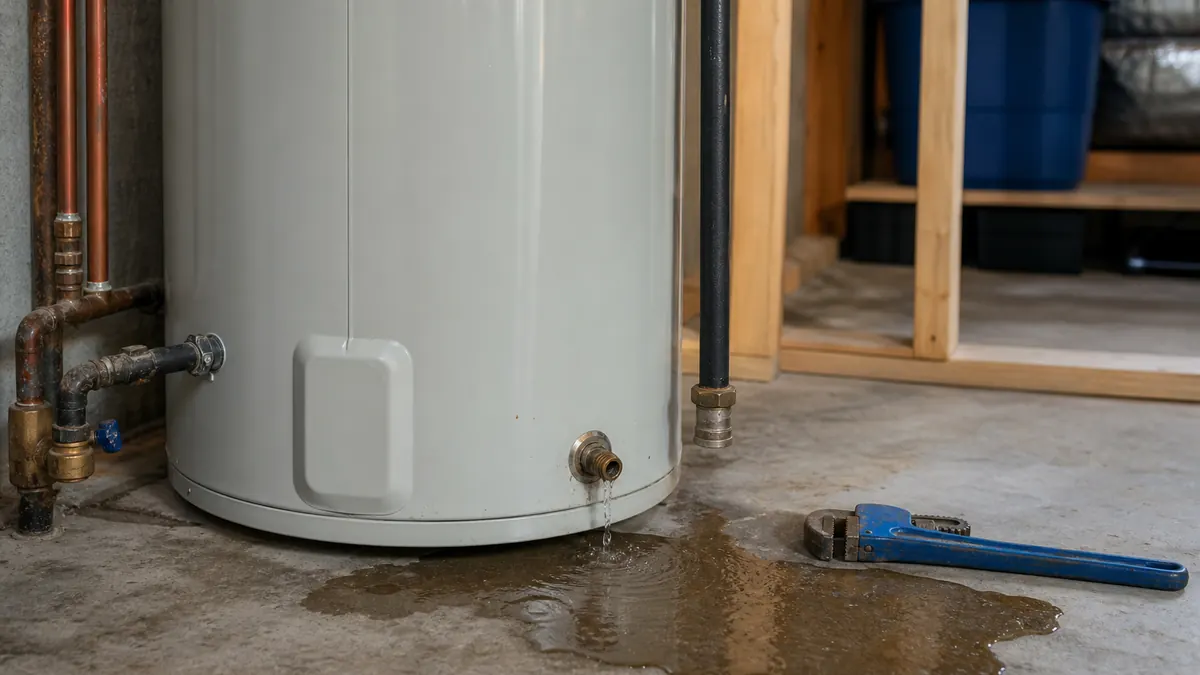
- Find the source. Leaks from the top (fittings, valves) are often a simple repair. Water coming from the bottom of the tank usually means the tank itself is failing.
- A dripping temperature and pressure (T&P) relief valve can signal dangerous pressure. Don’t cap or plug it.
- If the heater is 10+ years old and the tank is leaking, replacement is almost always the right call.
Finding water around your water heater is stressful, especially in a San Francisco basement or garage where the heater sits next to storage, finished walls or the neighbor’s unit. The good news: not every leak means a new water heater. This guide shows you how to make it safe in a few minutes, how to find where the water is coming from, and how to tell a quick repair from a replacement.
Step 1: Make it safe
- Cut the energy. For an electric heater, turn off its breaker at the panel. For a gas heater, turn the control knob to OFF (or PILOT). If you smell gas, leave the building and call PG&E or 911 from outside.
- Shut off the cold water supply. Close the valve on the cold water pipe that enters the top of the tank. This stops the tank from refilling.
- Protect the area. Move boxes and anything electrical away from the water. Use towels or a wet vac on the floor.
- If the leak is heavy, you can drain the tank: connect a garden hose to the drain valve at the bottom, run it to a floor drain or outside, and open a hot water faucet upstairs to let air in. The water is hot, so be careful.
Step 2: Find where the water is coming from
Dry everything with a towel, then watch for a few minutes. Where the water reappears tells you most of the story.
| Where you see water | Likely cause | Usually |
|---|---|---|
| Pipe connections on top | Loose fitting, corroded nipple or flex line | Repair |
| T&P relief valve or its discharge pipe | Faulty valve, high water pressure or overheating | Repair, test pressure |
| Drain valve near the bottom | Valve not fully closed or worn out | Repair |
| Under the tank, from the tank itself | Corroded, cracked inner tank | Replace |
| Water on the floor, heater dry | Condensation, a nearby pipe, or another appliance | Check nearby lines |
Leaks at the top of the tank
The hot and cold connections on top are the most common leak points, and the easiest to fix. Old galvanized nipples corrode over time, and flexible connectors wear out. Sometimes a fitting just needs tightening. If you see rust or green crust around a connection, the part should be replaced rather than tightened.
A dripping T&P relief valve
The temperature and pressure relief valve opens when the tank gets too hot or the pressure gets too high. A valve that drips once in a while may simply be worn out. But a valve that keeps discharging can mean the thermostat is set too high, the house water pressure is too high, or the expansion tank has failed. Many San Francisco homes have high street pressure, which is one reason we test pressure on every water heater call. Related reading: what normal water pressure looks like in a house.
Water coming from the bottom of the tank
Inside every tank water heater is a steel tank protected by a glass lining and a sacrificial anode rod. Once the anode is used up, the steel starts to rust from the inside. When rust eats through, water seeps out from under the tank or the jacket. A leaking tank cannot be repaired. It will only get worse, and it can fail suddenly.
Repair or replace?
Here is the rule of thumb we use with customers:
- Repair if the leak comes from a fitting, valve or connection, and the heater is less than about 8 to 10 years old.
- Replace if the tank itself is leaking, the heater is 10 to 12 years or older, you see rust in the hot water, or you are getting repeated problems.
If you replace, it is a good moment to consider a tankless water heater. It saves space, which matters in most SF garages and basements, and it usually lasts longer than a tank. It costs more up front, and older gas lines sometimes need to be upsized.
Code items that matter in San Francisco
A new water heater in San Francisco needs a permit and has to meet current code. That includes seismic strapping (two straps on a standard tank), a properly piped T&P discharge line, correct venting for gas units, and often an expansion tank. When we replace a heater, we take care of these items so it passes inspection and stays safe in an earthquake.
How to prevent the next leak
- Flush the tank once a year to remove sediment, especially with hard water.
- Check the anode rod every 3 to 4 years and replace it when it is worn. It is the cheapest way to extend tank life.
- Test the T&P valve once a year by lifting the lever briefly.
- Keep the thermostat around 120°F. It is safer and easier on the tank.
- Check your house water pressure. Above 80 psi, a pressure regulator protects the heater and every fixture in the house.
Frequently asked questions
Is a leaking water heater dangerous?
It can be. Water near a gas burner or electrical parts is a safety risk, and a leaking tank can fail and flood the area. Shut off the power or gas and the cold water supply, then have it checked.
Can I still use hot water if my water heater is leaking?
Only if the leak comes from a loose fitting at the top and stops once tightened. If water comes from the bottom of the tank or the leak keeps coming back, keep the heater off until a plumber checks it.
How long do water heaters last?
A standard tank water heater usually lasts about 8 to 12 years. Tankless units often last 15 to 20 years with regular maintenance.