Leaks & Pipes
Record High Tides in San Francisco: How to Protect Your Home From a Sewer Backup
- San Francisco set a new October high tide record on October 11, and tides are predicted to run more than half a foot higher on October 27 and 28.
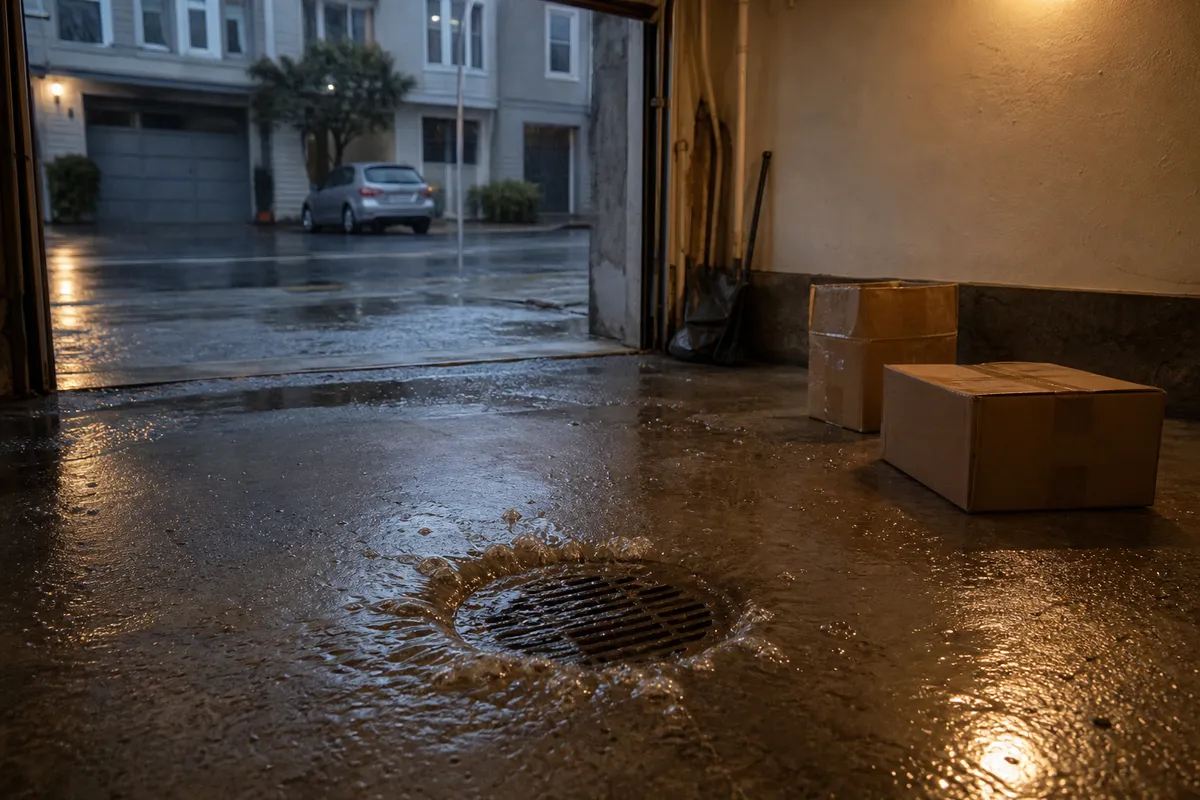
- High water does not usually come through your front door. In a house, the bigger risk is sewage backing up through the lowest drain: a basement shower, a garage floor drain or a ground floor toilet.
- Homes most at risk have fixtures below street level, an old or root-filled sewer lateral, or a sewage ejector pump.
- Before October 27: test your ejector or sump pump, have a slow main line cleared and inspected with a camera, and find out if a backwater valve makes sense for your house.
If you live in Bayview, Hunters Point, Dogpatch, Mission Bay or anywhere close to the Bay, you probably saw the news last weekend. On Sunday, October 11, the tide gauge at Crissy Field measured 1.73 feet above the average daily high tide, a new record for October. The Embarcadero flooded in spots, a Highway 101 off-ramp in Mill Valley closed, and waves at South Ocean Beach reached the Sloat dunes. Scientists expect this El Niño winter to bring the highest king tides on record to the Bay.
Most coverage is about roads and beaches. Our phone calls are about something else: “Is this going to come up through my basement drain?” This guide answers that question for San Francisco homes, in plain language, with the steps that actually lower the risk.
Why high tides can mean trouble inside your house
Most of San Francisco has a combined sewer system: rain from the street and wastewater from your home travel in the same pipes to the treatment plants on the east side of the city. Along the waterfront, those pipes and outfalls sit close to Bay level.
When a big tide and a heavy rain hit at the same time, the system has less room to drain. Water in the public sewer can rise, and it will look for the lowest opening it can find. In many homes, that opening is a drain inside the house.
Is your house at risk? A 2-minute checklist
| Your situation | Risk | Why |
|---|---|---|
| Bathroom, laundry or unit below street level | Higher | Sewage flows downhill to the lowest fixture first |
| House has a sewage ejector pump | Higher | If the pump fails during a storm, everything stays in the pit and backs up |
| Drains gurgle or go slow after rain | Higher | Usually roots, a sag or a partial blockage in the side sewer |
| Original clay or cast iron sewer lateral (pre-1960) | Medium | Cracks and root intrusion reduce how much the line can carry |
| All fixtures well above street level, line recently cleaned | Lower | Gravity is on your side |
One thing many owners do not know: in San Francisco, the side sewer (lateral) that runs from your house to the city main is the property owner’s responsibility to maintain. If it is cracked or full of roots, a storm will find the weak point.
What to do before October 27
- Test your pumps. If you have a sewage ejector or sump pump, pour a bucket of water into the pit and make sure it kicks on and empties. Check the alarm, if you have one. Pumps that sit idle for months are the ones that fail during the first big storm.
- Watch for warning signs. Gurgling toilets, a tub that drains slowly when the washer runs, or a sewer smell in the basement are signs the main line is partly blocked. Fix that now, not during the storm.
- Clear and inspect the main line. A camera inspection shows roots, cracks, sags or offset joints in your lateral. Cleaning or repairing the sewer line before the wet season costs far less than cleaning up after a backup.
- Ask about a backwater valve. A backwater valve lets wastewater leave your house but closes when water tries to flow back in. For homes with fixtures below street level, it is the single most effective protection. A plumber can tell you if your layout allows one and where it would go.
- Check your cleanout cap. The cleanout is the capped pipe near the front of the house or in the basement. A missing or cracked cap is an open door for sewer water. Make sure it is in place and easy to reach.
- Move valuables up. Anything stored on the floor near a low drain should go on shelves for the season.
If water is already coming up through a drain
- Stop using water in the whole house. Every flush and every load of laundry adds to the backup.
- Stay out of standing sewage and keep kids and pets away. Turn off electricity in that area only if you can do it from a dry spot.
- Call a plumber to find out if the blockage is in your line or in the city main. If water is coming out of a street manhole or several neighbors have the same problem, also call SF311.
- Take photos of the water, the drain and any damage before cleaning. Your insurance company will ask for them.
What a pre-storm visit from us looks like
When a San Francisco homeowner calls us about flood or backup risk, this is what we do:
- Walk the lowest level with you and find every drain and fixture below street level.
- Test the ejector or sump pump and its check valve, float and alarm.
- Run a camera through the main line so you see the inside of your lateral on screen, not just our opinion.
- Give you a written price for anything that needs fixing, with the urgent items separated from the ones that can wait.
Here is what one of our customers in San Francisco wrote after we fixed a backup in a below-grade home:
“Our home is below grade, and thus has a pump to push everything up to the sewer line. It stopped working, which means everything was backing up into the bathtub. The guys at AB Plumbing came out, took the pump apart piece by piece, even called the manufacturer to go over details, and not an hour and a half later they got it working perfectly again.”
Cory Knox, San Francisco · Google review
We are based at 2975 San Bruno Avenue, a few minutes from Bayview and the southeast waterfront, and we have been working on San Francisco sewer lines since 2003. Licensed and insured, CSLB #876212, with 24/7 emergency service.
Dates to watch this season
- October 27 and 28: tides predicted more than half a foot higher than last weekend’s record.
- Late November and late December: the main king tide windows of the winter. A storm on one of these days is the highest risk scenario for low-lying areas.
Sources: tide data and forecasts as reported by SFGate (October 10 and 11, 2026) and the National Weather Service coastal flood advisory for the San Francisco Bay shoreline (October 9 to 13, 2026).
Frequently asked questions
Can high tides cause a sewer backup in my house?
Yes, mainly when a high tide and heavy rain happen together. San Francisco uses a combined sewer system, so when the pipes near the Bay fill up, water can rise and come out of the lowest drain in a house, usually a basement shower, floor drain or toilet below street level.
What is a backwater valve and do I need one?
A backwater valve lets wastewater leave your home but closes when sewer water tries to flow back in. It is most useful for homes with bathrooms, laundry or units below the level of the street sewer. A plumber can check if your layout allows one.
Who is responsible for the sewer line from my house to the street in San Francisco?
The property owner is responsible for the side sewer (lateral) from the house to the city main. Cracks and roots in that line are a common reason backups happen during storms.
Does homeowners insurance cover sewer backup?
Often not by default. Many policies only cover sewer backup if you added a water or sewer backup endorsement, so check with your insurer before the wet season.